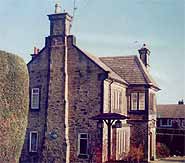
In days past, the Crabtree Brook, called
a river on some old maps, ran down into Bagley Dyke
eventually joining the Don at Brightside. The area was
scantily populated by farmers, tanners and charcoal
burners.
The ponds were not a natural feature, but landscaped
in the garden of Crabtree Lodge, a gothic style mansion
built in the first half of the nineteenth century by
a Mr Rotherham, and used in heavy winters as an ice
rink to entertain friends. Over time, the lodge was
home to Charles Atkinson JP, the Mayor of Sheffield
and industrial entrepreneur Edward Tozer (of the famous
steelmakers Steel, Peech and Tozer) – himself
a mayor and twice Master Cutler.
The Lodge was eventually demolished, with the site
now being used for a care home. But the garden and ponds
remain almost intact, and can be visualised as they
were in their heyday.
Crabtree was originally part of Pitsmoor Common, which
once stretched from the Toll Bar cottage down to Fir
Vale. Taking a walk through Crabtree Ponds up by the
brook to Crabtree Road brings you to Rose Cottage on
your right. In the 1700s this belonged to the Nutt family,
and its seclusion and ready supply of water made it
ideal for their trade as skinners and tanners.
The estate of new houses was built on what was once
a cricket field. Standing on the site was a chapel and
a row of picturesque cottages, on a summer’s day
a penny’s worth of strawberries could be bought
served on a cabbage leaf. Alas the cottages were demolished
at the start of World War I. |