logo Burngreave Messenger Issue 36 - November 2003.
   
Petre Street through the ages
by Albert Jackson

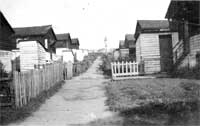
The recent football festival (see Football Festival a Great Success) was the latest sporting success at Petre Street, a site that has seen many changes over the years. As the industrial revolution got underway this ‘charming piece of woodland’ saw factories and terraced housing spring up, followed by a wooden shanty town for munitions workers during the First World War.

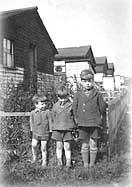
Petre Street photo. Copyright David Ainscough.

When the site was cleared in the 1970s it became an important Urban Wildlife Zone and was home to rare beetles in the 1980s.

Now Burngreave Rangers are working to tidy up the paths and green spaces, the Green Environment Project are undertaking a new survey and the Caribbean Sports Club hope to develop a new sports facility.

They want your suggestions for a name and a look at times past might just inspire your nomination. All suggestions to the Messenger.


“There was a very pleasant walk up the hillside to Grimesthorpe road through a then picturesque lane known as Carwood lane, which ran alongside a large wood called ‘Hall Car’, which extended over the site between where All Saints’ Church now stands and the lane alluded to. Hall Car Wood was a charming piece of woodland, covered with primroses, anemones and blue bells in their respective seasons and ringing with the song of birds. One year it was said that a nightingale had taken up its abode there and warbled the night through during the months of May and June.”

Hall Esq writing his recollections of the area in about 1825.
All Saint’s Church Parish Magazine, 1885.


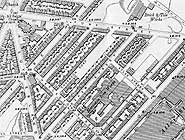
1905 map of Petre Street.
Larger View
(72k, download time 27 secs. approx. on a 28.8k connection).

Terraces spring up

Between 1850 and 1900 thousands of terraces and back-to-back houses covered the fields of this once idyllic area. Amenities were provided by the church and financed by the steel magnates who lived in big houses above the Don Valley, their view marred by smoke and grime from their many steelworks. They controlled much of the lives of their workforce and their families. Benjamin Huntsman, John Brown, Thomas and Mark Firth, The Vickers family – the names are endless.

In the First World War the only bombs to fall on Sheffield were targeted at these steel works. On the night of 25th September 1916 a lone Zeppelin dropped thirty-six bombs between Burngreave Cemetery and Darnall before heading home without any resistance. The total loss of life was twenty-eight. A hotel, a chapel and many houses were damaged, including Lyons Street and Cossey Street but the industrial targets were totally missed.

All photographs
Copyright © David Ainscough

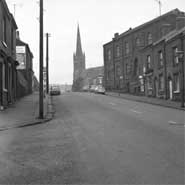
John Brown provided the money for All Saints Parish Church and School, now on the site of St Peter’s Church and All Saints’ Community Centre.

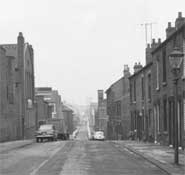
The rows of terraced houses that used to stand on the Petre Street playing fields were demolished in the 1970s.

Sheffield’s shanty town

During the First World War a wooden shanty town was built along Petre Street to house workers brought in from the country to provide labour for the arms factories.

This housing was better than the permanent housing as the family houses had three bedrooms, a front room with stove and oven and a scullery with a bath and a gas heater to heat the piped water supply, with lighting provided by gas mantles.

The houses were demolished just prior to the Second World War, when a barrage balloon unit was stationed on Smiths Field.
More photographs can seen at David Ainscough's website: www.streetsparade.com
     
Back.
Top.
Next.