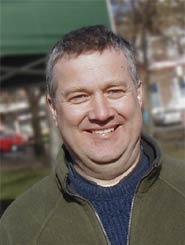
Community Rep interview
by Mark Lankshear
Kelvin Pine helped organise the very first meetings about
New Deal and was appointed as a Community Rep on the Partnership
Board in August 2000. Since then he’s been elected onto the
Board twice and is one of only three Reps who have been involved
throughout.
"I’ve lived in Burngreave the whole of my adult life,
it’s my home and I got involved in New Deal because I’ve
always believed people should put something back into their home
community. I feel that after a shaky start, New Deal is improving
in lots of ways and we’re now starting to see real results."
Why have you stayed involved for so long?
The New Deal is complicated and takes time to learn about and understand.
I stayed on the board to add my experience. The new Partnership
Board, with 10 community reps, works well. There’s a good
mix of new members bringing enthusiasm and new ideas and old hands
to help them along. It takes a lot of energy though, and there’s
always a risk of getting jaded, so this is definitely my last two
years.
So how do you feel the New Deal is going?
It’s improving. We’re starting to see projects coming
through and starting to make a real difference. The Community Learning
Campaign has been very successful, talking to people who don’t
usually get heard. That’s what it’s all about, finding
the gaps that the statutory agencies leave. Behind the headline
grabbing projects like the Police Team there has also been quieter
work, like the project to make older people’s houses more
secure, and maybe that’s also helped to bring down the crime
figures.
How can the New Deal succeed in the future?
We need to concentrate primarily on people, improving their skills
and making sure they have the opportunities for a healthy life,
a good education and the jobs they want – the way it happens
in other areas of the city. There’ll also be money to spend
on bricks and mortar, like on Spital Hill, but we must put the people
first.
What would make being a Rep easier?
New Deal is about breaking the mould, not just using the same old
public sector thinking. We need to be willing to take risks and
even make mistakes, as long as we spot them early so that time and
money isn’t wasted. I’m concerned about having so much
money in one small area when our neighbours share similar problems.
Our successful ideas should act as a catalyst for change across
the city. I’d like to see our projects use the New Deal funding
to get matched funding to expand the areas they can serve.
Other Community Rep interviews:
Issue 32, June 2003: Aisha
Special K
Issue 33, August 2003: Adam
Jones
Issue 34, September 2003: Natasha
MacFarlane
Issue 35, October 2003: Tony
Hall
Issue 36, November 2003: Dorrett
Buckley-Greaves
|