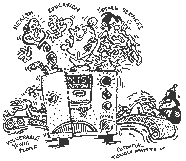
Pitsmoor Children Labelled? Personal information about 40,000 plus ‘vulnerable’ children in Sheffield, a third of all children, may soon be available to a range of agencies, including the police, through a new ‘web-based portal’. Because of the poverty and related issues in Pitsmoor, this could mean between two-thirds and three-quarters of Pitsmoor children going on the new system. Potential Criminals The pressure for the new information system, called the SHIRT project, comes from the government, who want to see local councils, education officials, health service and police co-operating to keep track of potential criminals. Sheffield is one of the “trailblazers” for this scheme, to be introduced nationally in September 2003. Improved Services Everyone agrees that something needs to be done. At the moment it is possible for a child to be excluded from school; starting to get in trouble with the police; Social Services concerned and the family visiting the GP, but without the police, education, sthese professionals having a clue about what each other is doing. Better co-ordination could mean improved services for vulnerable children and their families. Stigmatising Pitsmoor Children At the same time, there is concern that the new systems will stigmatise hundreds, if not thousands, of families in Burngreave. Some are asking why the agencies don’t concentrate on the much samller number of children who are particularly vulnerable, for which tracking and referral arrangements are not great at the moment, rather than risk stigmatising huge numbers of children from poorer backgrounds. There are also problems with working out exactly what issues make children vulnerable. Which are they? If it is a number of factors, will the database be able to work this out? It has also been pointed out that all the vulnerability factors appear to blame the children and families. Poor schools, poor youth provision and poor social services provision also make families vulnerable, but it seems doubtful that these factors will be included. Data Protection Concerns There may also be concerns about data protection. Many in the Somali community were concerned recently when information about children’s ethnic origin collected in schools for statistical purposes was used to send letters to over 400 Somali families with daughters warning parents of the law regarding female circumcision. The database assumes that data is collected with consent, but is this true? Will you be surprised if you or your child is on the new database? Will you be surprised if information you gave to your doctor ends up with the police? Data before Delivery? Is the Council putting collecting information before looking at how to improve the delivery of services? It is very unclear whether any of this will work; whether the different databases will be able to talk to each other and whether it will just lead to agencies which are already struggling being swamped with information. It seems as though those in power have become mesmerised by the idea that more information is the answer. Those in the community are often well aware of which children are in need, but are just looking for better services to meet those needs.
|
MESSENGER
GUIDE TO DATA PROTECTION
Under the 1998 Data Protection Act all personal information should be: Fairly and lawfully processed Accurate Not kept longer than necessary
Adequate, relevant and not excessive Processed
in accordance
|